Hair Transplant Recovery Timeline: A Complete Week-by-Week Guide
I Wish Someone Had Told Me This
Here's the thing about getting a hair transplant: the surgery is the easy part. You sit in a chair, someone way more qualified than you does incredible work, and then you walk out the door looking like you lost a fight with a lawnmower. That's when the real adventure begins.
I got my transplant about five years ago. Zero regrets. I want to be upfront about that. But if I could go back and tell myself one thing, it would be: you're about to spend two weeks convinced you made a terrible mistake, and that's completely normal.
My problem wasn't the surgery itself. It was the recovery information. My clinic gave me a set of instructions — solid stuff, professional, thorough. But the moment I got home, I started doing what every patient does: I went online. And that's where things got complicated.
Every doctor seemed to have a slightly different protocol. One forum said no washing for 5 days. Another said gentle washing on day 2. One surgeon's website said sleeping at 45 degrees was critical. Another said it didn't matter much. I spent more time cross-referencing post-op instructions than I spent researching the clinic itself. And all that conflicting information did one thing really well: it made me anxious.
So here's the timeline I wish someone had handed me. Not a clinical document, just the real, week-by-week reality of what happens after a hair transplant, from someone who's been through it.
Before You Even Get to the Clinic: Prep Your Recovery Space
Nobody talks about this enough. You're going to come home from surgery and your head is going to look like something out of a sci-fi movie. For a solid 48 hours, you will not want to leave your apartment or hotel. Plan for that.
Here's what I wish I'd had ready before my procedure:
A foam shampoo: the kind you don't need to lather between your hands first. You want something you can apply gently, directly, without rubbing. Your clinic will probably recommend a specific one, but make sure you actually have it at home before surgery day.
A travel pillow or neck pillow for sleeping upright. You'll need to sleep elevated for a few nights, and propping yourself up with regular pillows is a losing battle at 3am.
Anti-itch lotion: whatever your clinic approves. The itching will come, and you'll want relief that doesn't involve your fingernails anywhere near your scalp.
A spray bottle with saline or whatever your clinic prescribes. This becomes your best friend for the first week.
Comfortable, button-down shirts. You do not want to pull anything over your head for at least a week, ideally two.
Stock your fridge, get your streaming queue ready, and mentally prepare for a few days of looking rough. This isn't vanity, it's logistics. The more comfortable your setup, the less stress you'll put on yourself during the most critical healing window.
Before you even get to this point, make sure you've asked the right questions during your consultation here's a guide on what to ask your surgeon.
Days 1 to 3: The Immediate Aftermath
Let's get this out of the way: you're going to look rough. Your recipient area will be red, dotted with tiny scabs, and possibly swollen. Your donor area (usually the back of your head) will be tender and might have a bandage.
The first night is the weirdest. You're trying to sleep sitting up, your scalp feels tight, and you're hyper-aware of every sensation on your head. Is that tingling normal? Is that tightness a problem? Why does my forehead feel weird?
All normal.
Swelling typically starts around day 2 and peaks around day 3 or 4. Here's something I didn't expect: the swelling migrates down. It starts at your scalp, then moves to your forehead, and can even reach your eyes. You might wake up on day 3 looking like you went a few rounds in the ring. it's temporary, it's harmless, and it's completely expected. here's a deeper dive on managing swelling and pain.
During these first few days, your job is simple: follow your clinic's instructions, keep your head elevated, take your medication on schedule, use that spray bottle religiously, and resist the overwhelming urge to touch your head.
And here's the emotional part nobody warns you about. Somewhere around day 2, there's this moment where you look in the mirror and think: what have I done? Your head looks alien. You can't go outside without drawing stares. You can't believe you paid money for this.
That thought is universal. It passes.
Days 4 to 7: The Scabbing Phase
Scabs start forming over each graft site, which is exactly what's supposed to happen. They'll be small, dark, and make your head look like it has a bad case of something you don't want to Google.
Somewhere around day 4 or 5, you'll do your first real wash. This is terrifying. You're standing in the shower, gently — gently — letting water run over thousands of grafts that cost you real money, trying not to dislodge anything. Your clinic should give you specific instructions on technique (foam shampoo, patting motion, no rubbing). Follow them exactly.
The swelling that started at your scalp has probably migrated to your forehead and maybe your eyes by now. You might look puffy. This is normal and typically resolves within a few days.
Activity-wise, you're still in lockdown mode. No gym, no direct sun, no alcohol, no swimming. Basically, if it sounds fun, you can't do it yet.
If you're unsure about whether your scabs look the way they should, this article breaks down what's normal and what to watch for.
Week 2: Finding a New Normal
The scabs start falling off — and here's where most patients have a minor heart attack: some of them will take the transplanted hair with them. You'll see tiny hairs on your pillow, in the shower, on your towel. You'll think the grafts are falling out.
They're not. The follicle is anchored underneath. What's shedding is just the hair shaft. The root — the part that actually matters — is staying put and doing its thing below the surface.
This is also when most people go back to work. The awkward question is: what do you tell people? That's personal. Some patients are open about it, others wear a hat and say nothing. Whatever you choose, know that by week 2, things are looking noticeably better than day 3. The redness is fading, the scabs are mostly gone, and you can almost pass for normal.
I say almost because here's something that varies wildly from person to person: visibility. I have very fair skin and very dark hair. Every bit of redness on my scalp was glaringly obvious. My friend — Indian, got his transplant around the same time — was basically undetectable by week 2. Your skin tone, hair color, hair texture, overall health, the technique used, the number of grafts — all of it affects how quickly you look "normal" again.
Weeks 3 to 4: Shock Loss (Don't Panic)
This is the hardest part, psychologically. The transplanted hairs fall out. Most of them. Sometimes all of them.
It's called shock loss, and it's completely normal. In fact, it's a sign the process is working exactly as it should. The follicle goes through a natural shedding and regrowth cycle. The hair that was transplanted was in a specific growth phase; it sheds, the follicle rests, and then it starts producing new hair from scratch.
But knowing that intellectually and believing it when you're staring at a scalp that looks like nothing happened — those are two very different things.
This is exactly the moment where people spiral. They go online, they find horror stories, they convince themselves they're in the small percentage where it didn't work. The anxiety is real. It's fueled by the amount of conflicting information out there.
Here's what you do during shock loss: nothing. You follow your protocol, you stay off Reddit at midnight, and you trust the process. I know that sounds dismissive, but five years later, I promise you — shock loss is just the toll you pay on the highway to the result.
Months 2 to 3: The Dormant Phase
Welcome to the waiting game. Your scalp looks... unremarkable. The redness has mostly faded, the texture has normalized, and to the untrained eye, it looks like nothing happened. Including to your own trained eye.
This phase is boring, and boring is good. Underneath the surface, follicles are in their resting phase (telogen, if you want the technical term). They're gearing up to produce new hair, but they're taking their sweet time about it.
Some patients start seeing the first signs of growth — tiny, wispy hairs that are barely visible. Others see nothing yet. Both are normal. Your body runs on its own schedule, not anyone else's timeline.
The best thing you can do during this phase is live your life. Go back to the gym (you should be cleared by now). Get some sun (with SPF on your scalp). Stop checking the mirror every morning looking for progress.
Months 4 to 6: Early Growth
This is when things get interesting. New hairs start appearing, and they're real — not the wispy ghosts from month 2, but actual hairs with substance. They might look a bit different from your existing hair at first. Curlier, finer, lighter — transplanted hair often comes in with a slightly different texture initially. It usually normalizes over time.
Around month 5 or 6, you start having those moments. You catch your reflection and something's different. Your hairline is filling in. That temple area that used to be bare has coverage. Someone comments on your hair and you're not sure if they know or if they're just saying it looks good.
This is when the investment starts feeling real. The result is still far from final — you're maybe 50–60% of the way there — but the trajectory is clear. It's working.
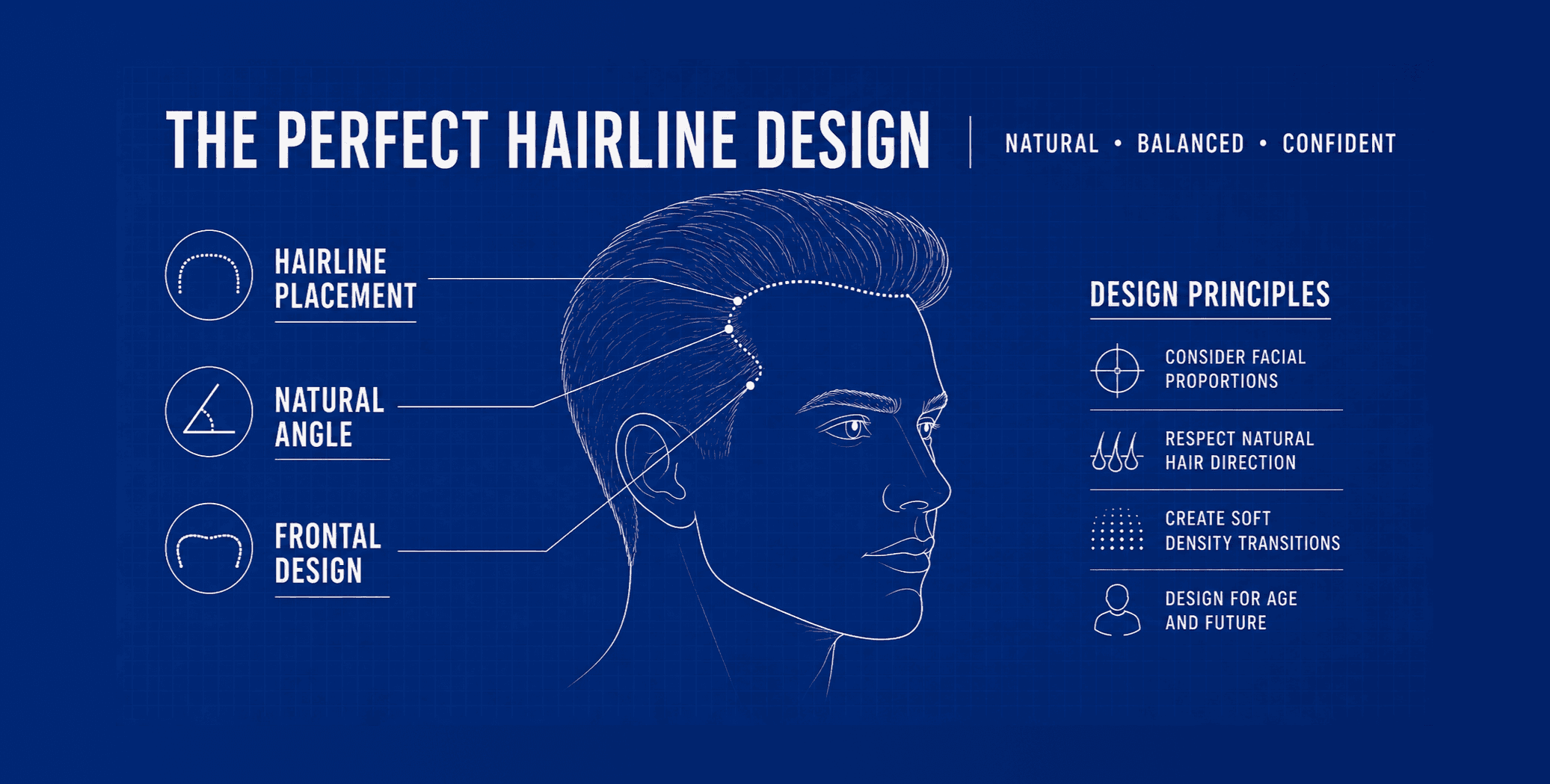
This is also when the design of your hairline starts to reveal itself. That conversation you had with your surgeon about natural vs. aggressive, straight vs. slightly irregular — you can finally see it taking shape.
Months 7 to 12: The Payoff
Hair density increases significantly. The new hair thickens, the texture normalizes, and you start looking like the version of yourself you imagined when you first decided to do this.
Most surgeons say final results are at 12–18 months. In my experience, month 10 was where I stopped thinking about it entirely. Not because nothing was changing — things kept improving for months after — but because the result had reached a point where I just looked like... me. The better version I'd pictured.
A few things worth knowing:
Results aren't perfectly uniform at first. Some areas fill in faster than others. The crown, for example, tends to be slower than the hairline. Give it time.
Your hair will continue to mature for up to 18 months. Don't judge your final result at month 8.
If you had a large session (3,000+ grafts), the density progression can feel slower simply because there's more ground to cover. That doesn't mean it's not working.
Why I Wish I'd Had a Recovery App
Let's be real — I had a great surgeon and solid post-op instructions. But my actual recovery experience was basically: read a PDF once, forget most of it, panic at midnight, Google symptoms, get conflicting information, wonder if I should bother my clinic with another question, decide not to, worry silently, repeat.
The thing that would have changed everything? Seeing the right information at the right time. Not a 10-page document I read once and lost. Not a generic Google result from a forum in 2014. Just: here's what's happening on day 6, here's what's normal, here's what's not, and here's when to actually call your doctor.
That's the idea behind recovery apps like what we're building at Capila: a companion that's personalized to your clinic's specific protocols and timed to where you actually are in your recovery. Not because your surgeon's advice isn't good enough, but because you need to hear it more than once, and you need to hear it at 2am on the toilet when the anxiety hits. Not just during a 10-minute phone call three days after surgery.
The clinics that get this are already rethinking how they deliver post-op care. And as a patient, that's the kind of clinic I'd want to choose.
Quick tips and recommendations for your hair transplant recovery
Prioritize the questions that clarify your surgeon’s specific protocol before surgery. Use your consult to confirm washing timing, sleeping position, exercise, hats, and what “call us” symptoms look like.
For swelling: keep your head elevated, stay consistent with any clinic-approved cold or compression guidance, and expect swelling to migrate downward before it resolves.
For scabs: follow the exact wash technique your clinic gives you. Avoid rubbing or picking. If scabs are lingering past the timeframe your clinic described, message the clinic for direction.
For shock loss: expect shedding. Track progress by week and month, not day to day, and avoid doom-scrolling forums when anxiety spikes.
For hairline expectations: confirm the design goals before surgery, and remember that texture and density can look uneven during early growth while hairs mature.
Five Years Later
I'm sitting here writing this with a full head of hair that I genuinely don't think about anymore. That's the end state you're working toward not obsessing over grafts and growth cycles, but just... living.
The recovery is temporary. The awkward phase is temporary. The anxiety is temporary. The result is either permanent or at least buy you a decade of worrying less / feeling better about your appearance.
If you're about to go through this, or you're in the middle of week 2 wondering why you did this to yourself, you're fine. It gets so much better. And if you want to be better prepared than I was, look for a clinic that gives you more than a PDF and a phone number. You deserve support that actually matches the quality of the surgery you're getting.
Support that goes beyond the clinic
Book a Demo