How to Choose a Hair Transplant Clinic: The Questions Nobody Asks

The Obvious Stuff (And Why It's Not Enough)
You already know to check credentials. ISHRS membership, board certifications, years of experience — that's all important, and I'm not going to tell you to skip it. Google it, verify it, move on.
You also know to look at before-and-after photos. Every clinic has them. Every clinic's website looks impressive.
But here's the thing: the obvious checklist gets you to a shortlist of maybe 10–15 clinics that all look credible on paper. The hard part is figuring out which of those is actually the right one for you. And that requires asking questions most patients don't think to ask — because nobody tells them to.
I've been through this process myself. I researched dozens of clinics online — probably too many — and eventually got on evaluation calls with four of them. I picked one, went through with it, and the result is great. But the process of choosing? I got a lot of it wrong, and I learned most of the important lessons the hard way. I've also spent the last few years talking to clinics on the other side of the table, attending hair restoration conferences, and building technology for this industry. So this is coming from both angles: what I wish I'd known as a patient, and what I've learned about how clinics actually operate behind the scenes.
Do they explain your options, or just push one procedure?
This is the first real test, and you can usually feel it within the first 10 minutes of a consultation.
There are two main techniques in hair transplantation: FUE (Follicular Unit Extraction) and FUT (Follicular Unit Strip Surgery). They're different procedures with different trade-offs. FUE leaves tiny dot scars across the donor area and has a shorter recovery. FUT takes a strip from the back of your head, leaves a linear scar, but can sometimes yield more grafts in a single session. There are also variations and newer techniques within each category.
The point isn't which one is "better" — it depends on your hair loss pattern, your donor supply, your lifestyle, your goals. A good clinic walks you through both, explains the pros and cons for your specific case, and helps you make an informed decision.
A red flag? When the clinic only offers one technique and doesn't acknowledge the other exists. Or when they push you toward a procedure without explaining why it's the best option for you specifically. Some clinics default to whatever is operationally simplest for them — not necessarily what gives you the best result. That's not malicious; it's just a business incentive you should be aware of.
Here's what to listen for: does the surgeon explain why they're recommending a specific approach for your case? Can they articulate the trade-offs? Do they mention scenarios where a different technique might actually be better? If they can have that conversation openly, that's a clinic that's thinking about your outcome, not just their throughput. If you want a deeper list of what to bring up during that conversation, here are the questions worth asking your surgeon directly.
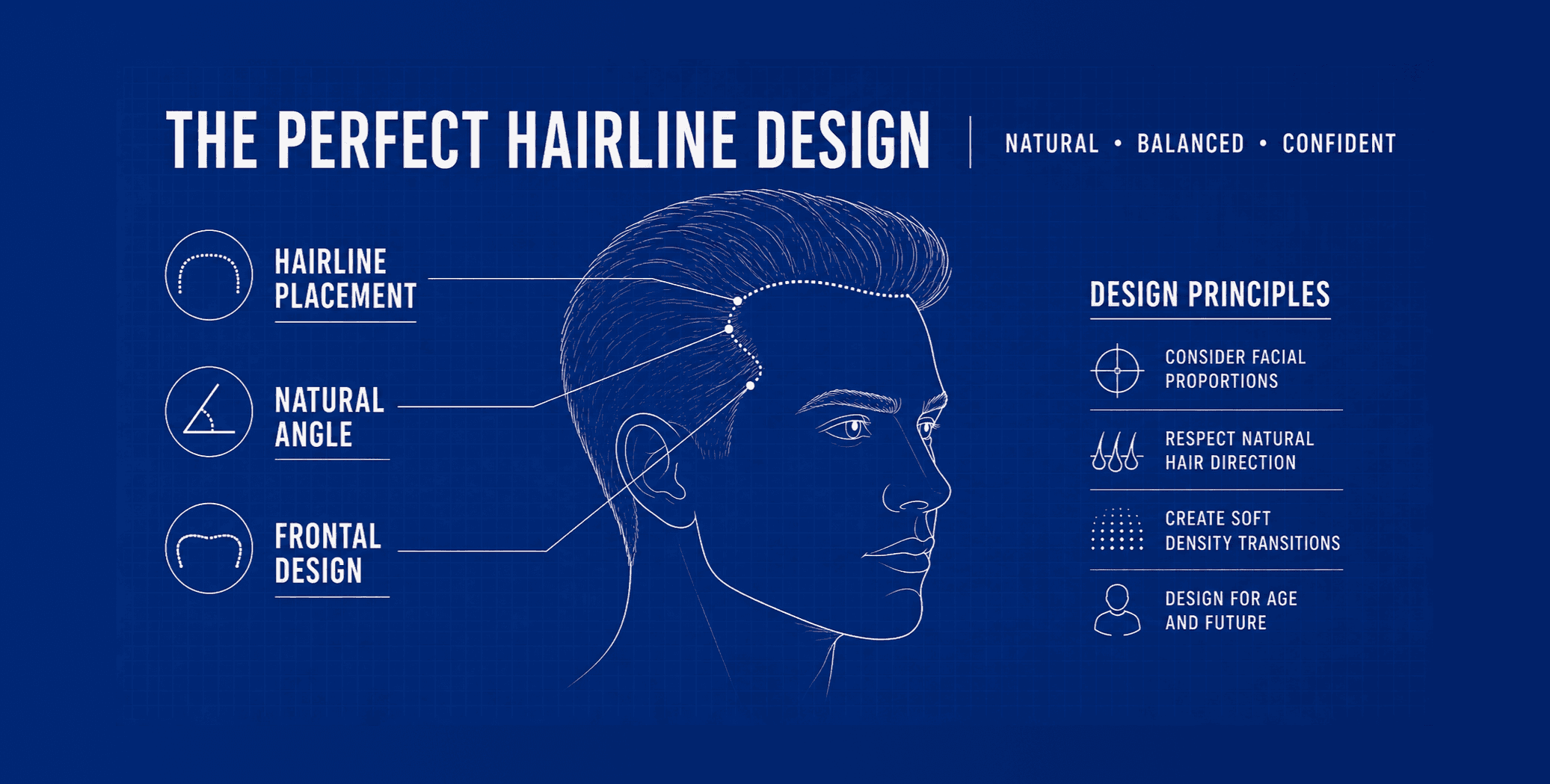
And don't underestimate the hairline design conversation. A great clinic will spend real time with you on this — it's not just "where do you want your hairline?" It's a discussion about facial proportions, age-appropriate design, and what will look natural in 10 years, not just today. This goes deeper into what that conversation should look like.
The Consultation Should Feel Like a Conversation, Not a Sales Pitch
Pay attention to the pace. A good consultation takes time. The surgeon (not just a coordinator, not just a sales rep — the actual surgeon) should sit with you, examine your scalp, discuss your expectations, and be willing to tell you things you might not want to hear.
Things like: "You don't have enough donor hair for the density you're imagining." Or: "Your hair loss isn't stable yet — I'd recommend waiting." Or even: "You're not a great candidate for this procedure."
A surgeon who's willing to turn away business is a surgeon who cares about outcomes. That's counterintuitive, but it's one of the strongest trust signals you can find.
On the flip side, watch out for high-pressure tactics. Limited-time discounts. "We had a cancellation so we can fit you in next week." Consultations that feel rushed, where the pricing conversation comes before the medical conversation. These aren't always dealbreakers, but they should make you pause.
Ask yourself: did I leave the consultation feeling clearer about my situation, or did I leave feeling pressured to book?
I'll share my own experience here, because I think it's instructive. The clinic I ultimately went with — I won't name names — rolled out the absolute red carpet during the evaluation phase. Everything was polished, attentive, reassuring. They made it feel like I was their top priority. Every question got a thoughtful answer. Every concern was addressed with confidence.
Then I booked.
And the moment I committed — paid the deposit, scheduled the date — the experience shifted. The main surgeon? I saw him for maybe 90 seconds total. That's not an exaggeration. Ninety seconds of face-to-face time with the person operating on my head. The rest was handled by the team, which was competent, but the contrast between the pre-booking experience and the actual procedure day was jarring.
It felt like a bait-and-switch. All the realistic details about what recovery would actually look like — the rough patches, the anxiety, the ugly duckling phase — had been glossed over or outright hidden during the consultation. And by the time I was sitting in the chair, I felt like I couldn't back out. That's a terrible feeling when you're about to do something permanent, expensive, and irreversible.
My result turned out great — I have zero complaints about the actual surgery. But the experience around it? Disappointing. And that's exactly the kind of thing that doesn't show up in a before-and-after gallery but absolutely shows up in how you feel about recommending that clinic to a friend.
The lesson: pay attention to whether the clinic is equally transparent about the hard parts of this journey as they are about the exciting parts. If everything sounds too perfect during the consultation, that's not reassurance — that's a red flag. You want a clinic that prepares you for what recovery actually looks like, not one that hides it to close the sale.
Before-and-After Photos: Look Deeper Than the Highlight Reel
Every clinic shows their best work. That's marketing, and it's fine. But the best clinics do something else: they show a range of cases.
What you want to see:
Cases that look like yours. Not just the guy who went from Norwood 2 to a perfect hairline. Look for patients with similar hair loss patterns, similar hair type, similar skin tone. Your result won't look like someone else's — it'll look like a version of your own situation, improved.
Realistic cases, not just home runs. Some of the most honest clinics show cases where the result is good but not perfect. Maybe the density isn't as thick as a 22-year-old's hairline — but it's a massive, natural-looking improvement. That kind of transparency tells you the clinic sets honest expectations.
Progression photos, not just "before" and "18 months later." Seeing the ugly duckling phase, the shock loss at week 3, the gradual filling in over months — that's a clinic that's documenting the real journey, not just cherry-picking the finale.
And one more thing: don't just look at photos on the clinic's website. Look for them on independent platforms. Google reviews with attached photos. RealSelf. Hair restoration forums where real patients post their timelines. The clinic's curated gallery is a starting point, not the whole picture. And be careful about what you read alongside those photos — there's a lot of misinformation out there about what's realistic and what's myth.
Reviews: Cross-Reference Everything
Speaking of reviews — don't just check one platform. Check several:
Google Reviews is the broadest and hardest to fake at scale. RealSelf has detailed patient diaries with photos and ratings across multiple dimensions. Trustpilot and similar platforms catch a different audience. Hair restoration forums (like HairRestorationNetwork) have deeply detailed patient logs that go month by month.
What you're looking for isn't a perfect 5.0 rating — that's actually suspicious. You're looking for patterns. Do the negative reviews complain about the surgery itself, or about the experience around it? There's a big difference between "my result wasn't what I expected" and "nobody answered my calls during recovery." The first might be bad luck; the second is a systemic problem.
Also, pay attention to how the clinic responds to negative reviews. Do they get defensive? Do they ignore them? Or do they engage professionally and try to resolve the issue? That tells you a lot about how they'll treat you if something goes wrong.
One thing I've noticed from the clinic side: the most common source of negative reviews isn't bad surgery. It's patients who felt abandoned after the procedure. They had questions during recovery, couldn't get answers quickly enough, and that anxiety colored their entire experience — even when the result ended up being great. Reviews are the biggest driver of new consultations in this industry, so clinics that invest in post-op support tend to have better ratings across the board.
The Turkey Question
Let's talk about it, because you're going to end up Googling it eventually.
Turkey has become the global hub for hair transplants. The prices are significantly lower than the US, UK, or Western Europe. The marketing is aggressive, polished, and everywhere — Instagram, YouTube, TikTok, Google ads. Some clinics offer all-inclusive packages: flights, hotels, airport transfers, surgery, aftercare, all for less than what the surgery alone costs in other countries.
Here's the nuanced take: there are genuinely excellent surgeons in Turkey. World-class. Some of the highest-volume, most experienced practitioners in the industry are based in Istanbul. The country's dominance in this field isn't just about price — there's real expertise.
I'll be honest — when I was evaluating clinics, my first instinct was to avoid the lower-priced options. I thought: this is my head, this is permanent, this is not the place to cut corners. And I understand that instinct. But after spending time in this industry, attending hair restoration conferences, and meeting surgeons from all over the world, I've realized that instinct is mostly wrong.
Lower prices in certain countries don't reflect lower quality. They reflect different economies — lower operating costs, lower cost of living, different healthcare infrastructure. Some of the most technically brilliant surgeons I've encountered at conferences are from places you might not expect: Bulgaria, Brazil, Mexico, Turkey. The idea that the best doctors are concentrated in the US or Western Europe is simply not true. This is a global specialty, and the talent is distributed globally.
What does vary is the consistency of the experience around the surgery — the consultation quality, the post-op support, the communication. And that's where your due diligence matters, regardless of geography.
But the volume in places like Turkey also creates a problem. The marketing machine is so strong and so uniform that it's hard to distinguish the excellent clinics from the mediocre ones. Everyone's Instagram looks the same. Everyone's website promises the same things. The packages are all priced within the same range.
So how do you cut through it?
The same principles apply, but with extra scrutiny. Who is the actual surgeon? In some high-volume clinics, the surgeon designs the hairline and makes a few incisions, but technicians do the majority of the extraction and implantation. That's not inherently bad — but you should know if that's the model, and you should ask directly.
What's the patient-to-surgeon ratio on any given day? A clinic running 4–5 surgeries simultaneously is a different experience than one running 1–2.
What does aftercare look like once you fly home? You're in a different country, possibly a different time zone. If something concerns you at day 5, who do you contact? How fast do they respond? Is there a language barrier?
None of this means "don't go to Turkey." It means: apply the same rigor you'd apply anywhere, and don't let a polished Instagram feed substitute for real due diligence.
What Happens After the Surgery Matters More Than You Think
This is the part most patients don't research — and honestly, it's the part that affects your experience the most.
The surgery takes one day. The recovery takes months. And the quality of your recovery support directly impacts two things: your stress level during healing, and (in some cases) your actual results, because anxious patients make mistakes — picking at scabs, washing too aggressively, skipping medication because "the internet said it wasn't necessary."
During your consultation, ask about post-op support specifically:
How will you receive your recovery instructions? Just a PDF, or something more structured?
If you have a question at midnight on day 5, what's the process? Do you email? WhatsApp? Is there an on-call number? The communication channel a clinic uses says a lot about how they think about patient support.
Will anyone proactively check in with you, or is it on you to reach out?
Does the clinic use any technology for recovery management — an app, a portal, automated check-ins?
These might feel like minor details compared to the surgeon's skill or the price. But I'm telling you from personal experience: the recovery is where the real anxiety lives. The moment you leave the clinic, you're on your own with your healing scalp and a million questions. The clinics that have thought about that moment — that have built systems to support you through it — are the ones that deliver the best total experience.
Some clinics are starting to use dedicated recovery apps that give you day-by-day guidance, timed to your specific surgery date. Others have built robust WhatsApp support systems. The format matters less than the intention: does this clinic care about what happens after you leave the operating room? The clinics that are thinking ahead are already integrating AI into their post-op workflows — not to replace the human touch, but to make sure patients get answers when they need them, even at midnight.
The Checklist You Actually Need
When you've narrowed it down to your final 2–3 clinics, here's what I'd evaluate:
The surgeon conversation. Did they explain your options, including the ones they don't personally prefer? Did they set realistic expectations? Would they tell you "no" if you weren't a good candidate?
The before-and-afters. Do they show a range of cases, including ones similar to yours? Can you find independent reviews with photos?
The reviews. What do the negative ones actually say? How does the clinic respond?
The post-op plan. What happens on day 3? Day 10? Month 2? Who supports you, how, and when?
The transparency. Do they tell you who exactly performs the surgery? Do they explain their pricing without pressure? Do they answer the uncomfortable questions?
The gut check. After the consultation, do you feel informed and confident? Or do you feel sold to?
A Note for the Clinics Reading This
I know some of you are reading this — and you should. Not because I'm trying to call anyone out, but because this is what your patients are thinking. This is the decision framework that's forming in their heads, whether they articulate it or not.
The clinics that win the trust battle are the ones that make it easy for patients to answer these questions. Show the range of your work, not just the highlights. Invest in your consultation process — it's the highest-leverage hour in your entire patient relationship. And think seriously about what happens after surgery, because that's what patients wish you knew — the post-op experience is where loyalty, reviews, and referrals are actually built.
The surgical quality gap between top clinics is narrowing. The experience gap is wide open.
Last updated: April 2026. This article is updated periodically as we learn more from patients and clinics. If you've gone through the process and want to share your experience, reach out — I'd love to hear your story.
Support that goes beyond the clinic
Book a Demo