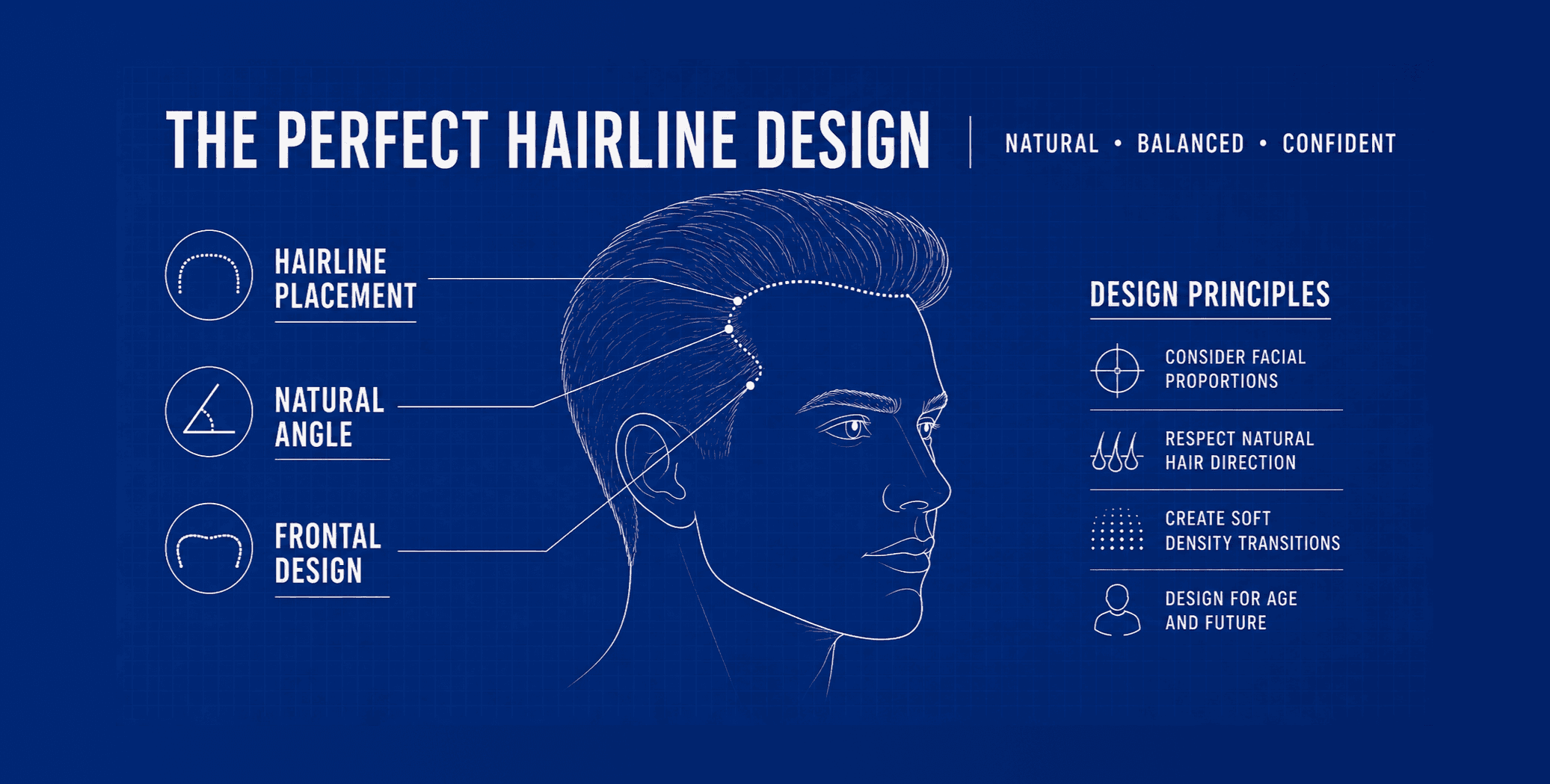
Demystifying hair transplant techniques: FUE, FUT, DHI, Sapphire, and the rest, explained
The Framework That Makes This Finally Click
I didn't understand this for a long time. I researched hair transplant techniques for weeks before my own procedure, and every article I read was a chaotic list of acronyms presented as if each one was a completely separate, unique technique. FUE, FUT, DHI, Sapphire FUE, Manual FUE, Robotic FUE, BHT — they all got thrown into the same pile, and I left every article more confused than when I started.
It wasn't until months later, talking to surgeons and attending conferences, that I realized the whole landscape fits into a simple mental model:
A hair transplant is two separate steps: extraction and implantation. Every technique you've heard of is just a variation on one of those two steps.
That's it. Once you see this, the acronyms stop feeling overwhelming and start feeling like what they actually are — descriptions of different tools and methods for two specific stages of the same procedure.
So let me walk you through it in that order: first, how hair is extracted from the donor area. Then, how it's implanted into the recipient area. And I'll be upfront about which choices actually matter for your result and which are mostly marketing.
Part 1: How the Hair Is Extracted
This is the first half of any hair transplant — getting the follicles out of your donor area (usually the back of your head, sometimes other parts of your body). There are really only two fundamentally different approaches here, plus some variations.
FUT (Follicular Unit Transplantation) — The Strip Method
The surgeon removes a thin strip of skin from the back of your head. A team then dissects that strip under microscopes into individual follicular units, which get implanted later.
The upside: Very efficient for harvesting large numbers of grafts in a single session (4,000+ is doable). Generally cheaper than FUE. Graft survival rates are comparable to FUE.
The downside: Leaves a linear scar across the back of your head. If you ever want to buzz your hair very short, it'll be visible. This is the main reason FUT has fallen out of favor.
When it still makes sense: Extensive hair loss that requires maximum graft count in one session, and you don't plan to wear your hair super short.
FUE (Follicular Unit Extraction) — One by One
Instead of a strip, the surgeon uses a tiny circular punch tool (0.7–1mm) to extract individual follicular units one at a time from the donor area.
The upside: No linear scar — just tiny dot marks that are basically invisible once healed. More flexibility in where you harvest from. Faster donor-area recovery.
The downside: More time-consuming (5–8 hours for a standard session). Requires significant surgeon skill to avoid damaging follicles. For very large sessions, may need to be split across two days.
When it makes sense: The default for the vast majority of patients today. If you're reading this and wondering what you probably need, it's this.
FUE Variations (Same Method, Different Tools)
Within FUE, the main variations are just about how the punch is operated and where the hair comes from:
Manual FUE — surgeon extracts by hand with a non-motorized punch. More tactile feedback, slightly slower.
Motorized FUE — a motorized punch does the rotation. Faster, slightly less control.
Robotic FUE (ARTAS) — a robotic arm guided by AI assists with extraction. Consistent but removes some surgeon control over graft selection. Available at some Western clinics, rarely used in Turkey.
Body Hair Transplant (BHT) — still FUE, but harvested from the chest, beard, or body instead of the scalp. Used when scalp donor supply is limited. Niche, less predictable results.
None of these variations dramatically change the result on their own. They're different tools for the same fundamental job. The surgeon's skill matters far more than which specific tool they prefer.
Part 2: How the Hair Is Implanted
This is the second half of the procedure — taking the extracted follicles and placing them into the recipient area where you want new hair. This is where most of the "premium" marketing lives, and also where some real clinical differences exist.
The core question for implantation is: do you create the channels first and then insert the grafts, or do you do both at once?
Traditional Implantation — Channels First, Then Grafts
The surgeon creates tiny incisions (called recipient channels) in the scalp first, deciding angle, density, and direction for each one. Then the team inserts the extracted grafts into those pre-made channels, one by one.
This is the classic approach used with standard FUE and FUT. It works, it's proven, and in skilled hands it produces excellent natural-looking results.
Within traditional implantation, the tool choice matters:
Steel blades — the classic, affordable option. Creates slightly larger incisions. Well-proven, slightly more post-op inflammation.
Sapphire blades (Sapphire FUE) — uses synthetic sapphire crystal blades instead of steel. Creates smaller, V-shaped channels. Faster healing, denser packing possible, less scabbing.
Is Sapphire a real upgrade? Honestly — yes, but incrementally. The blade is sharper and more precise, which does help healing and packing. But the difference between a great surgeon with steel and an average surgeon with sapphire? The great surgeon wins every time. If your clinic includes Sapphire at no extra charge, great. If they charge a big premium for it, ask what the specific benefit is for your case.
DHI (Direct Hair Implantation) — One-Step Placement
DHI uses a specialized tool called a Choi implanter pen. The pen is pre-loaded with a single graft and inserts it directly into the scalp in one motion — creating the channel and placing the graft at the same time.
Important clarification: DHI is not a different extraction method. Grafts are still extracted using FUE. DHI only changes the implantation step.
The upside:
Precision. Maximum control over angle, depth, and direction of each graft. Particularly valuable for hairline work, eyebrow transplants, and beard transplants where angle is everything.
Less time outside the body. Grafts spend less time in holding solution, which may improve survival rates.
Sometimes no full shave required. Makes it more discreet — valuable for women or patients who don't want to shave their whole head.
The downside:
Slower. DHI takes significantly longer than traditional implantation, which limits session size (usually maxes out around 3,000–4,000 grafts).
More expensive. Typically 15–30% more than standard FUE because it requires specialized training and a larger team.
Surgeon-dependent. Not every surgeon is equally skilled with the Choi pen. A surgeon who primarily does FUE and dabbles in DHI probably isn't the best DHI option.
When it makes sense: Hairline refinement, adding density between existing hairs (where you need to work around existing follicles without damaging them), smaller targeted sessions, or patients who want to avoid a full head shave.
Hybrid Approaches
Some surgeons combine methods within the same procedure — for example, DHI for the hairline (where precision matters most) and standard FUE with sapphire blades for the crown (where volume matters more). Or FUT + FUE combined to maximize graft count.
Hybrid approaches can produce excellent results, but they require a surgeon who's genuinely skilled in multiple techniques — not just offering them for marketing purposes.
Putting It Together: How to Talk About Your Procedure
Now that you have the framework, you can read any clinic's marketing material or consultation recommendation and quickly parse what they're actually telling you:
"We perform Sapphire FUE with DHI" means: FUE extraction, sapphire blades for the recipient channels on most grafts, Choi pen for the more precise areas. That's a reasonable modern setup.
"We recommend FUT for your case" means: strip extraction. Ask why — is it because you need maximum grafts? Because of your donor area? If the answer isn't specific to your case, be skeptical.
"Our clinic specializes in Manual FUE" means: they're emphasizing the surgeon's tactile skill over automation. That's fine, but it's a marketing frame more than a clinical difference.
"Robotic hair transplant" means: FUE extraction assisted by a robotic arm. Same implantation step as any other FUE procedure. The robot only affects extraction.
See how much clearer it gets once you separate extraction from implantation?
The Real Honest Answer: Which Should You Get?
For most patients — moderate hair loss, standard hairline recession, 2,000–3,500 grafts needed — the answer is some version of FUE for extraction with traditional or Sapphire blade implantation. This is what the majority of patients get worldwide, it's what I had, and it's the default for good reason.
If you need very high graft counts (4,000+), FUT is still worth discussing with your surgeon.
If you're doing precise hairline work, smaller targeted sessions, or want to avoid a full shave, DHI for implantation makes sense — especially for the frontal hairline, even if the rest of the procedure uses traditional methods.
But here's the thing that matters more than any of this: the surgeon's skill and judgment beats the technique every single time. A world-class surgeon using basic FUE will deliver better results than a mediocre surgeon using the most advanced DHI setup. When you're evaluating clinics, focus on the surgeon and the total experience, not the acronyms.
The Red Flag to Watch For
If a clinic only offers one technique and presents it as the best option for every patient, that's a signal. Hair loss is individual. The right approach depends on your donor supply, your hair loss pattern, your age, your long-term plan, and your aesthetic goals.
The best consultations involve a surgeon explaining which extraction method makes sense for your case, which implantation approach fits your goals, and what the trade-offs are. A surgeon who can have that conversation — who's willing to say "I'd recommend X for the hairline and Y for the crown, here's why" — is showing you they're thinking about your outcome, not just their throughput.
Quick Reference Cheat Sheet
Extraction methods (how the hair comes out):
FUT — strip removal. Efficient for large sessions, leaves a linear scar.
FUE — individual extraction. No linear scar, the modern default.
FUE variations — Manual, Motorized, Robotic (ARTAS), Body Hair (BHT). All still FUE at the core.
Implantation methods (how the hair goes in):
Traditional (channels first, grafts after) — steel blades or sapphire blades. Proven, versatile.
DHI (Choi pen, one-step) — maximum precision. Best for hairlines and density work.
Hybrid — combinations of the above, tailored to different zones.
The bottom line: Technique is third or fourth on the list of what determines your result. Surgeon skill, aesthetic judgment, proper planning, and post-op support come first. Choose the surgeon, then let them recommend the technique.
For the full picture: how to choose the right clinic, what a transplant actually costs, and what to expect during recovery week by week.
Support that goes beyond the clinic
Book a Demo